• Shared definition of impact, scope and success criteria
• Three concrete measurement methods for ‘measuring after the lesson’ and ‘measuring with parents’
• An action plan enabling the team to continue independently
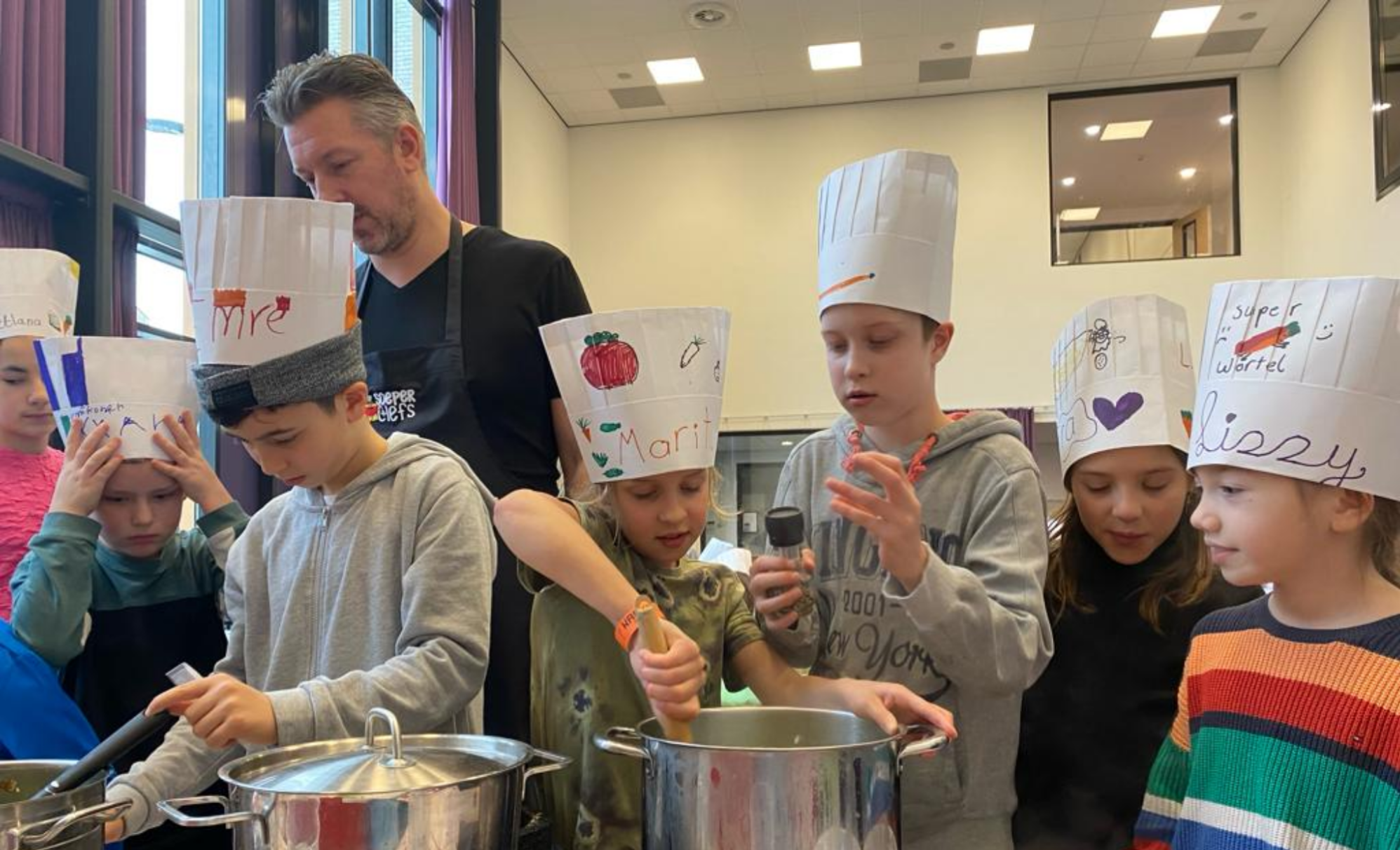
TommyTomato has a clear mission: to turn children into lifelong vegetable eaters. Through school lunches, cooking lessons and nutrition lessons, they aim to give every child in the Netherlands equal access to healthy food and a positive, sustainable relationship with eating.
Although the impact of the lunch programme was already measurable, the organisation found it challenging to demonstrate the impact of the cooking and nutrition lessons. Earlier attempts came with certain challenges, such as sensitivity to socially desirable answers in a survey or creating a high burden for parents or schools.
TommyTomato asked Been Management Consulting for help with a central question:
How can we measure and make visible the impact of our intervention (cooking lessons and nutrition lessons)?
Approach
We structured the process in three clear steps:
Step 1: Sharpen ambitions and define success
In this first step, we clearly mapped out why TommyTomato wanted to measure the impact of the cooking and nutrition lessons and what success would look like. Together, we aligned on which problem we wanted to solve, which goals we aimed to achieve, and when we could speak of success. This shared understanding clarified the ambition and formed the foundation for the rest of the trajectory. We then jointly determined the scope for measuring the impact of the cooking and nutrition lessons.
“We experienced the collaboration as exceptionally valuable. Thanks to two fresh perspectives on our business, our ideas were not only clearly structured but also translated into concrete actions.”
Marije van der Veen - Founder TommyTomato Education
Step 2: Generate and prioritise ideas
During a creative session, we gathered a wide range of measurement ideas. In this phase, we also explored different measurement options and discussed which approach would potentially be most valuable. Using an impact effort matrix, we selected a shortlist of promising ideas. In addition, the team formulated a shared goal for the future, providing direction for further development of the measurement method.
Step 3: Measuring with parents & developing an action plan
After prioritising the ideas, we focused on a crucial target group: parents. We analysed insights from a pre filled questionnaire, which revealed several challenges. With the help of a canvas, the team developed two measurement methods for measuring with or through parents. We refined these methods into a concrete action plan for development, testing, implementation and embedding, ensuring that the measurement could be structurally applied. By the end of the session, the team was equipped to continue building independently.
“We brought focus: bundling ideas into a measurable approach that accounts for the diverse needs of stakeholders.”
How we supported the creation of a future-proof vision and organizational design for a department of 150 employees within a Dutch regional grid operator.