• A clear and supported implementation plan to bring focus and get control over the change portfolio management
• An improved portfolio process, improved roles & responsibilities, including a new role of Epic owner
• A new portfolio-board meeting with a better representation of stakeholders
To tackle the enormous task of the energy transition, Alliander is fully committed to digitalization. With an abundance of ambitions and limited resources, choices are inevitable. But how do you determine which change initiatives deliver the most value? Been Management Consulting helped Alliander Kleinverbruik professionalize its portfolio management of change initiatives. Ricky van Dijk-Jonkman and Gijs-Jan Otten reflect on the collaboration.
It has become clear: the Dutch energy sector faces the greatest challenge in its history. Additionally, the sector is dealing with a significant shortage of technical personnel. How can the sky-high goals of the energy transition still be achieved?
This question is constantly present at Alliander. As the largest grid operator (DSO) in the Netherlands, Alliander is working on expanding the power grid, which is reaching its limits due to the massive switch to electricity across the country. The pressure to make progress is therefore high.
One of Alliander’s most important tools in the race against time and the lack of people is digitalization. “You want to fully utilize the talent of the people you do have,” says Ricky van Dijk-Jonkman. “Digitalization helps enormously with this, among other things, by making processes more efficient or even fully automating them.”
Making choices
As the manager of the Kleinverbruik Change Team, Ricky is responsible for the digitalization and change projects within Alliander’s consumer division. While these digitalization efforts should relieve pressure, the Change Team itself ironically faces the same challenge.
“There are so many desires to improve and digitalize,” Ricky explains. “We want to streamline processes, but the energy transition also brings many new processes that we need to implement. And because Alliander is so busy, customer lead times are increasing, making good customer communication more important. Our team focuses on that as well.”
The result is a change portfolio that has grown enormously and has become much more complex. “There is more work than we can handle, that’s for sure. So, we will have to make choices.”
But how do you make the right choices? This is, in a nutshell, what portfolio management is all about. “We had already made some improvements to our portfolio process, but it lacked a coherent aggregation where we were really working towards a higher level of maturity,” Ricky explains.
"They understand that every change process is different and only takes shape as it progresses. They are therefore extremely flexible. And of course, they bring their own expertise, but always from a position of equality.”
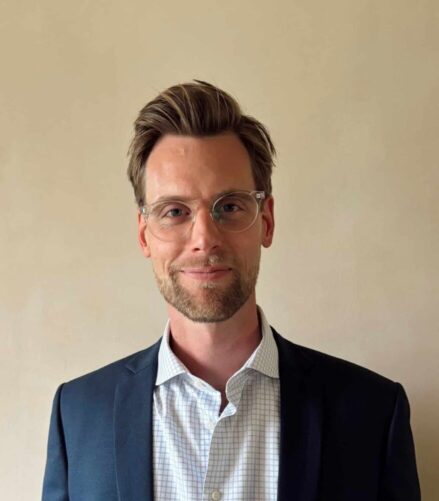
Ricky van Dijk-Jonkman, manager of the Kleinverbruik Change Team
Identifying bottlenecks
In order to change that, Alliander turned to Been Management Consulting. In a team composed of people from Alliander (next to Ricky consisting of Maarten Wind, Jan Eisinga, and Sophie Paulides) and Been (Gijs-Jan Otten, Hannah Foaden, and Roderick Oe), they worked on an improved portfolio process.
The first step was analyze the current situation. “It all starts with gathering information: what is going well and what is not?” says Gijs-Jan Otten, who focuses on the energy transition as a manager at Been Management Consulting.
“To get all the bottlenecks on the table, we spoke with a very broad group of stakeholders,” he explains. “Not just the people directly involved in the portfolio management process, but also the second line, who are indirectly affected by it.”
Involving such a broad group of stakeholders serves a dual purpose, he explains. “Firstly, you obviously get a better picture of the situation when you include different perspectives. Additionally, you create support from the start. You not only give people the feeling that they are being heard but actually do something with their input.”
Ricky also found it very valuable. “It gave us a clearer picture: where is the real issue? I sometimes have the pragmatic tendency to make things a bit smaller. Because the consultants from Been kept asking critical questions, I gave it the attention it deserved.”
Sharpening the ambition
The next phase consisted of various workshops in which – again with as broad a group of stakeholders as possible – the improved portfolio management process was shaped step by step.
The importance of carefully analyzing the question became clear in the first workshop. “It was about formulating the ambition: where do we want to go with portfolio management?” says Gijs-Jan. “We quickly realized that there wasn’t really a shared vision yet, and even no shared definition: people talked about portfolio management, but there was sometimes confusion about the term itself.”
In various sessions, the definition, ambition, and desired process were gradually defined. “What do we want to control, what not? What steps do we go through, what output do we create with it? Who is involved at what moment? And perhaps most importantly: how do you manage it?” Gijs-Jan outlines some crucial questions.
Good portfolio management enables organizations to monitor the strategic coherence of the change portfolio and weigh strategic interests so that the total value realized can be maximized.
“At Been, we use a maturity model to determine how successful organizations are in managing their portfolio,” Gijs-Jan explains. “Based on various criteria, the organization is classified, with the lowest level being ‘strategic disconnect’ and the highest level ‘strategic prioritization.’ Our model can also determine the ambition in the maturity model.”
Saying ‘No’
Ultimately, a detailed concept for the improved portfolio management process was developed. Due to the complex, rapidly changing environment in which the Change Team operates, the improved process is designed according to the SAFe Agile framework. But no matter how much complexity is involved, the process ultimately still revolves around that one challenge: how do you determine which projects to work on?
Ricky explains that the crux of portfolio management can also be explained by reversing that question: which projects will you not work on? “Until then, choices were not always made. When you work on such a socially urgent task as the energy transition, everything is important. That makes it difficult to say ‘no.’ But given the limited resources, it is crucial.”
To determine which improvement projects can have the greatest impact, Alliander will work with a uniform assessment framework. “How do you weigh improving your customer communication against replacing your work order process? Or implementing safety measures against researching the impact of new legislation,” Ricky outlines. “That’s obviously very difficult. The assessment framework provides a methodology for this.”
More people at the table
Additionally, there will be a new portfolio board meeting, with more stakeholders joining. “We previously approached it from a Management Team (MT) perspective and therefore missed the perspective of the Product Managers and the Enterprise Architects. More people at the table doesn’t necessarily make decision-making easier, but you can better oversee the consequences of a choice.”
It also helps optimize the synergy between projects. “For example, IT can advise: ‘Combine these three developments, and you’ll make a big impact.’ And if something isn’t practical from an architecture or product perspective, you’ll find out immediately, not a month later.”
“I think that’s one of the most important mindset shifts,” Gijs-Jan adds. “You no longer assess value at the initiative level, but at a higher level: you look at the entire portfolio in its interrelationships.”
Doing it ourselves
Some other important aspects of the new portfolio process are clearer KPIs and role descriptions and the introduction of an Epic Owner role. All in all, it should help Ricky’s Change Team to make optimal use of the limited resources.
Before that happens, the process still needs to be implemented. Alliander is explicitly taking the lead in this. “For a sustainable result, it is crucial that the organization itself drives the project as much as possible,” Gijs-Jan explains. “That was a clear focus from the beginning.”
“Of course, Gijs-Jan, Hannah, and Roderick helped us with their expertise to come up with a solid approach,” Ricky adds, “but I can’t place the actual achievement of the end goal with an external party. We ultimately have to do that ourselves. Otherwise, I create a dependency, and I’ll still be working with Been in a year. And I found the collaboration very pleasant, but that’s not the intention,” he laughs.
Looking back, he even thinks he waited too long to visibly take the lead himself. “I initially let Been Management Consulting stand in front of the group for quite a long time, even with the MT. Only in a later phase did I do it myself so that it really became my story. In hindsight, I should have taken that on earlier. I’ve learned from that.”
Involving everyone
This ties into one of the most challenging elements of any change process: getting people on board. It is therefore always one of the central pillars in Been Management Consulting’s approach.
“We don’t just look at the process and business aspects, but always keep an eye on the human side,” says Gijs-Jan. “How do you organize change management, how do you involve everyone?”
At Alliander, this was also a challenge, surprisingly partly because the employees are so involved in their work. “They are highly motivated to serve the social importance they work for: the energy transition,” he explains. “But such an improved portfolio process doesn’t immediately deliver extra grid connections.”
This sometimes made it difficult to get stakeholders to make room in their busy schedules. “Sometimes attendance at information sessions was lower than we had hoped. Next time, I might do even more to reach as many people as possible, such as visiting team meetings.”
Uncharted territory
In that sense, a change process is very similar to the energy transition itself: it is largely uncharted territory and therefore requires constant experimentation and adjustment. “That’s one of the things that makes working with Been so pleasant,” says Ricky. “They understand that every change process is different and only takes shape as it progresses. They are therefore extremely flexible. And of course, they bring their own expertise, but always from a position of equality.”
From the solid foundation that has been laid together, Ricky and his team are now working with confidence – and with appropriate respect for the challenges – on implementing the improved portfolio process. “Once that is in place, we can work even more effectively on the energy transition. Our people already do their work very well, with efficient portfolio management we can also ensure that they are always doing the right work.”
"We don’t just look at the process and business aspects, but always keep an eye on the human side.”
How we helped NAM translate strategic goals into measurable design criteria, compare scenarios, and select a scalable organizational structure with governance.